

What to Check Before Buying DID Numbers
Check routing, capability, ownership requirements, recurring costs, and porting options before ordering numbers for your team.
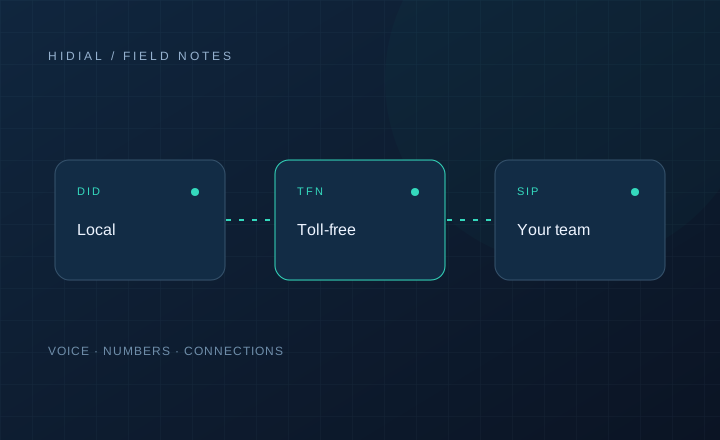
A DID is a telephone number that routes incoming calls to your business system. Buying a number is only the first part of putting it to work. You also need a reachable destination, the right account permissions, and a way to handle calls when agents are unavailable.
Before placing an order, define the job of each number: sales callbacks, a support queue, a branch office, or a campaign response line. That decision guides the routing and capabilities you need.
Confirm where the number can receive calls
Ask which callers can reach the number and whether any geographical restrictions apply. Check the area code or toll-free prefix, availability, and any documentation needed for the intended country. An available number in a catalog is not proof that your business qualifies to activate it.
For a number advertised as local, confirm the location it represents and use it in a way that accurately identifies your business. Do not imply you have a local office simply because your caller ID has a local area code.
Separate voice, messaging, and verification
Voice service does not automatically include SMS, MMS, or support for third-party account verification. Ask about each required capability before purchasing. Messaging activation may involve a separate provider, registration process, or approval.
Somos notes that voice and text capabilities on a toll-free number need to be coordinated to prevent unauthorized text enablement. If different companies provide those services, document which company controls each function and how changes are approved.
Map the inbound route
Decide whether the number will terminate on a SIP trunk, IVR, VICIdial in-group, PBX extension, or forwarding destination. Ask how the dialed number is passed to your system and whether the format includes a country code or prefix.
Test calls from more than one originating network. Confirm two-way audio, DTMF, business-hours routing, after-hours handling, and voicemail where applicable. A provisioned number is not ready to publish until the complete call path works.
Understand costs and capacity
Request a breakdown of setup charges, monthly rental, inbound usage, forwarding charges, and any minimum commitments. Ask whether concurrent inbound calls have a limit and how an exhausted limit is handled.
If you use toll-free numbers, the business receiving the call generally pays the toll-free calling charge. That does not make all destinations, services, or account arrangements identical. Compare the actual quote and permitted calling coverage.
Ask how you can move or retire the number
Confirm porting support, account records required for a transfer, and any contractual conditions. Keep an inventory showing the number, provider, billing account, business owner, and destination route. Accurate records make future changes easier.
Before releasing a number, remove it from your website, ads, CRM workflows, and printed material. Keep a transition plan for customers who may still use it. Do not assume a released number remains available for you to reclaim.
Send HiDial the number type, preferred coverage, inbound destination, and estimated usage when requesting a quote. Describe messaging requirements separately so the discussion covers the full use case.