

Local Numbers for Sales Teams: When to Use Them and When Not To
Local numbers can help sales teams connect with prospects in specific markets.
Local numbers can help sales teams connect with prospects in specific markets. When someone sees a familiar area code, the call may feel more relevant than a random out-of-state number.
But local numbers are not a shortcut for better sales results. They need to be used carefully. If the campaign has poor lead data, aggressive dialing, or weak caller ID practices, local numbers can still get ignored, blocked, or labeled as spam.
When Local Numbers Make Sense
Local numbers work well when your sales process is tied to geography.
A real estate team calling homeowners in a specific city may want numbers from that area. An insurance agency working by state may want numbers that match each licensed market. A home services company may use local numbers for each service area.
Local numbers can also help organize campaigns. You can assign numbers by region, lead source, product, or team. This makes reporting easier and helps callbacks route to the right place.
When Local Numbers Help Answer Rates
A local number can help organize regional outreach, particularly when the prospect expects a local service. Test actual answer rates rather than assuming the area code improves them.
This is useful for appointment setting, field sales, insurance, solar, home improvement, healthcare, real estate, and local service campaigns.
Still, the number is only one part of the call. The prospect must have a reason to answer, the caller ID must be clean, and the campaign must respect consent and opt-out rules.
When Local Numbers Are Not the Right Choice
Local numbers are not always better.
If your business is a national support operation, a toll-free number may be easier for customers to recognize. If customers already know your brand, a main business number may create more trust than a local number they have never seen.
Local numbers can also become hard to manage if you buy too many without a plan. If nobody knows which campaign each number belongs to, callbacks can get lost.
Do not use local numbers to make a business look local when it is not relevant to the customer. That can create distrust if the person answers and realizes the call has no real local connection.
Number Reputation Still Matters
A local area code does not protect a number from reputation problems.
If the number is used for too much volume, receives complaints, or is tied to low-quality leads, it can still show as Spam Likely. If people call back and reach the wrong department, that can also hurt the customer experience.
Track performance by number. Watch answer rates, complaints, callbacks, and dispositions. If a number starts performing poorly, investigate the campaign before simply replacing it.
How Sales Teams Should Use Local Numbers
Assign numbers intentionally. Use them by territory, campaign, or lead source. Make sure inbound callbacks route to the right team. Keep documentation so managers know which numbers are active and why.
If your team uses ViciDial, map local numbers to the correct campaigns or ingroups. Test inbound calls before launching outbound traffic.
For larger teams, document callback handling, provider capacity, and how reputation reports are investigated. There is no universal resting period that guarantees removal of a label.
Local Numbers vs Toll-Free Numbers
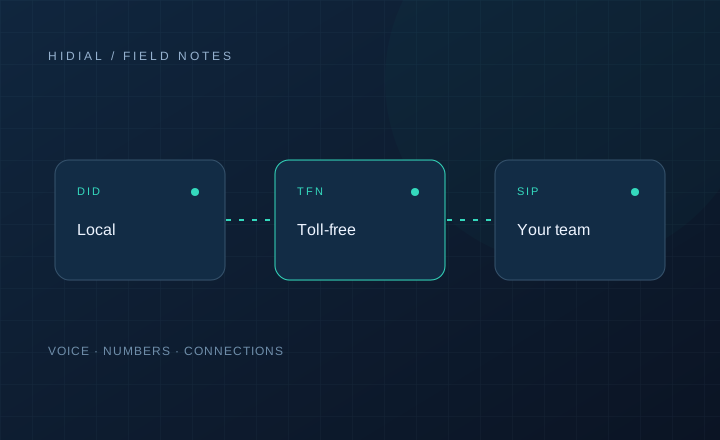
Local numbers are usually better for regional outreach. Toll-free numbers are usually better for national support, inbound sales lines, and customer service.
Many businesses use both. Local numbers can support outbound sales campaigns, while a toll-free number can serve as the main public contact number.
The right setup depends on how your customers recognize you and how your team handles calls.
Discuss your setup
Contact HiDial with your phone-system layout, numbers, destinations, and routing requirements.