

What Is SIP Trunking and How Does It Reduce Business Calling Costs?
SIP trunking connects a business phone system or dialer to a voice provider over an IP network.
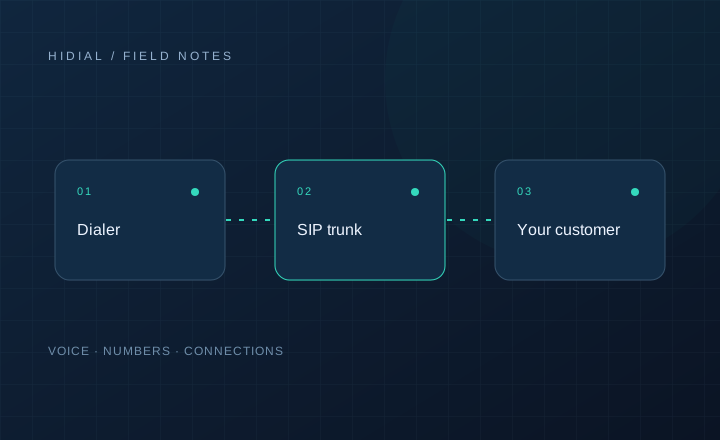
SIP trunking connects a business phone system or dialer to a voice provider over an IP network. It can replace dedicated traditional telephone circuits, but the actual savings depend on your current contract, calling patterns, and the service you choose.
Compare the full operating cost before migrating rather than assuming a fixed savings percentage.
What a SIP trunk does
Your PBX or calling platform sends signaling requests to the provider, which routes calls toward the telephone network. Audio travels over a media path that also needs to work through your network and firewall configuration.
Inbound calls travel back through the provider to the destinations configured in your system. A SIP connection is one part of that path; queues, IVRs, recordings, and agent handling are functions of the connected platform or applications.
Reduce unused capacity where possible
Some traditional circuits package capacity in fixed blocks. A SIP provider may offer a different channel or usage arrangement that better fits your traffic. Confirm minimum commitments and the process for changing capacity.
For dialers, plan both simultaneous calls and new attempts per second. Increasing one allowance does not necessarily increase the other.
Compare usage and destination rates
A different rate structure can reduce costs for some destination mixes and increase them for others. Use your actual inbound and outbound records to compare quotes.
Check billing increments, minimum call charges, toll-free usage, forwarding, number rental, and any premium destinations. An unlimited plan may have restrictions that make it unsuitable for automated campaigns.
Account for network and platform costs
Moving voice onto an IP network does not make bandwidth, network resilience, or phone-system administration free. Review connectivity, failover, security, devices, and any licensing or hosting required by the system you connect.
If the existing platform already supports SIP, the change may be simpler than replacing the entire phone system. If an upgrade is needed, include it in the migration budget.
Test before replacing the old service
Build the new connection separately and verify audio, caller ID, transfers, callbacks, and call records. Use a controlled pilot to compare technical performance before moving all traffic.
Handle number porting as a separate cutover, keep the existing service active while it is arranged, and define fallback routing for important inbound numbers. No provider transition can guarantee zero disruption in every case.
Ask for a workload-based quote
Share destination countries, monthly minutes, peak capacity, traffic type, and number requirements. Compare the quote with your current total bill and the one-time cost of the change.
Request a HiDial quote to discuss SIP connectivity and the requirements of your business calling setup.