

SIP Trunking for Medicare Campaigns: What You Need to Know
Plan capacity, callbacks, recording workflows, and agent routing for Medicare campaigns using current CMS marketing guidance.
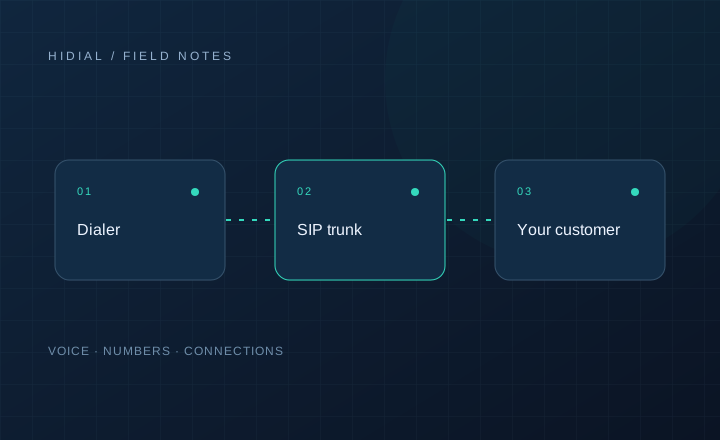
A Medicare campaign needs a working voice connection, a documented reason for each contact, and a reliable path to the appropriate agent. SIP trunking provides the connection between your dialer or phone system and the voice network. Campaign rules, agent eligibility, disclosures, and customer records need their own operational controls.
Before choosing a trunk, describe how calls will be placed and received. An inbound inquiry line, an appointment reminder, and an outbound plan discussion can have different requirements. Treat them as separate workflows when planning the system.
Establish the permitted contact workflow first
Medicare.gov explains that plans and their representatives generally cannot call or text prospective beneficiaries without permission, with circumstances such as existing plan membership treated differently. A purchased lead file does not, by itself, document the basis for each contact. Review Medicare's marketing rules.
Record the contact source, the permission or relationship your compliance process relies on, and any restriction on the follow-up. Make suppression information available to the systems placing calls. Keep the business identity accurate when presenting caller ID or introducing an agent.
Use guidance for the correct contract year
CMS says its updated CY 2027 marketing and communications policies apply beginning October 1, 2026. Its summary includes changes to Scope of Appointment scheduling, TPMO disclosures, and recording retention. For example, the updated TPMO disclosure timing is before benefits are discussed, rather than within the first minute. CMS's CY 2027 changes.
Use the applicable CMS and plan guidance when approving scripts, appointment processes, and retention settings. Give someone responsibility for updating those workflows when requirements change. A saved dialer template can outlast the rule it was originally designed to support.
Plan channels and calls per second separately
Tell the SIP provider your destination countries, campaign type, expected peak concurrent calls, and rate of new call attempts. A dialer can generate many attempts while comparatively few calls are connected to agents.
Confirm the provider accepts the traffic type. Ask what happens when capacity, destination, or account limits are reached. Use those documented limits to configure pacing, then test with a small group before increasing volume. More trunk capacity does not create more available agents.
Make every displayed number a working callback route
A beneficiary returning a call should reach the right business and team. Map each displayed number to a known inbound destination, including overflow and after-hours handling. Keep the relationship between campaign, number, queue, and business owner documented.
Test caller ID presentation and two-way audio across representative destination networks. Caller ID authentication is separate from a recipient's interest in the call and does not guarantee that a receiving network will remove a warning label.
Route to an eligible and available agent
Configure the connected platform to consider the agent's role, licensing, plan-related authorization, and current availability as appropriate to the operation. Those decisions belong in the routing and campaign applications; a SIP trunk does not determine them automatically.
Test transfers with the same path the campaign will use. Confirm that a representative receives the necessary contact context and that the call is handled correctly when a destination is busy, unavailable, or closed. Avoid putting sensitive beneficiary information into routine SIP troubleshooting tickets.
Treat recording as a complete workflow
Check where recording starts, what happens during transfers, and how records can be retrieved by an authorized reviewer. Where the updated CMS requirements apply, its summary describes six years of retention and permits transcripts in place of recordings for years four through six. CMS retention summary.
Define access controls, retention, retrieval, and deletion responsibilities across the dialer, recording storage, and any downstream platform. Do not assume the voice provider stores the recordings or that turning recording on is sufficient for compliance.
Validate before expanding the campaign
Document test calls for audio, DTMF, transfers, recording continuity, callbacks, opt-out handling, and after-hours routing. Keep timestamps, timezones, and call identifiers for failures. Agree on escalation contacts and conditions for pausing a campaign.
Contact HiDial with your dialer, number inventory, destinations, and peak capacity requirements to discuss SIP connectivity. Have the people responsible for Medicare marketing approve the contact and agent workflows separately.