

VoIP for Phone Verification and Transactional Calls
Design voice-code delivery and service notifications with clear triggers, retry limits, privacy controls, and application-level verification.
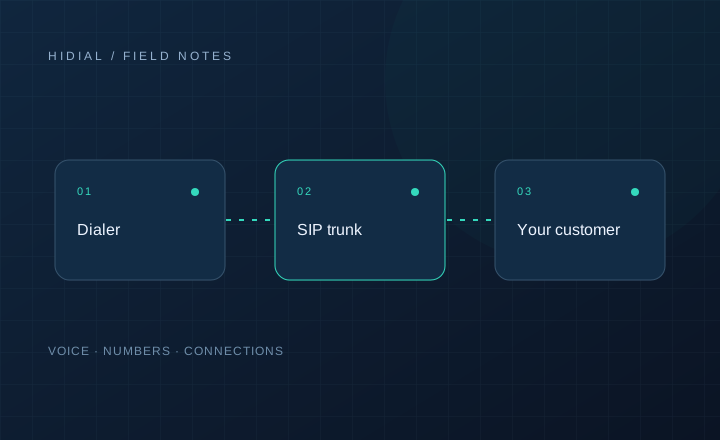
Phone verification and transactional calls start with an event in an application: a customer requests a code, confirms an appointment, or needs an update about a service. They require a more deliberate workflow than uploading a list to a sales campaign.
VoIP provides a voice path. The application still needs to decide when a call is permitted, what it should say, how a response is verified, and when to stop retrying.
Define the event that authorizes each call
Tie a verification attempt to a specific user request or approved account action. For a service notification, record the event, recipient, and intended purpose. Keep enough information to investigate duplicate or unexpected calls without retaining unnecessary personal data.
Separate these workflows from promotions. Adding a sales message to an account notification can change the contact's purpose and the requirements that apply. Review the rules for the actual message, technology, and jurisdiction rather than relying only on the label "transactional."
Confirm the capabilities you are buying
Ask whether the proposed setup supports the destinations, voice playback, DTMF, call-status events, and application interfaces you need. A SIP trunk alone does not create or verify one-time codes.
Voice and messaging are different capabilities. A number enabled for calls may not support SMS or the verification service used by a third-party website. Buying a DID does not guarantee that another platform will accept it for account registration or recovery.
Distinguish delivery from successful verification
A carrier may report that a call was answered even when voicemail or another person received it. That is not proof that the intended user completed the verification process.
Define the actual success condition in the application. For a spoken code, the user might enter the received value into the authenticated workflow that requested it. For an appointment, a recorded keypad response may be enough to confirm a choice, but it should not be treated as stronger identity proof than it provides.
Store transport events separately from business outcomes. A status such as answered, busy, or failed describes a call attempt; it does not establish an account action was authorized.
Protect codes and limit repeated attempts
Generate secrets securely, make them short-lived, and reject reuse after successful verification. Limit code guesses and resend requests. A new request should not allow someone to make unlimited attempts against the same account.
Do not include usable codes in ordinary application logs, support tickets, recordings, or analytics exports. Decide whether recording is appropriate for the verification path at all. Protect any data exchange between the application and voice system.
NIST classifies authentication using the public telephone network as restricted and identifies risks such as SIM changes and number porting. It also calls for alternative authenticator types where PSTN-based authentication is used under its framework. Evaluate those risks before relying on voice delivery for sensitive account actions. NIST authentication requirements.
Design retries around the event
Set a retry policy for busy, unanswered, failed, or delayed calls. Use an application event identifier to prevent duplicate jobs from generating repeated calls. If an old event arrives after the transaction is complete, discard or reconcile it instead of sending another code.
Apply limits at more than one level where appropriate, including the account, destination, and overall service. Monitor unusual call volume and destination costs so an exposed verification endpoint does not become a source of telephone abuse or unexpected charges.
Test the complete path
Test real target devices and destination networks with authorized test recipients. Check speech clarity, DTMF, voicemail behavior, failed-call handling, expired requests, duplicate events, and the application's recorded outcome.
Have a plan for a customer who cannot receive the call. The fallback should follow your account-security design, rather than automatically reducing the checks needed to access an account.
Contact HiDial with the application workflow, destinations, expected volume, and required voice capabilities. Confirm the integration and number requirements before building a service around them.