

How to Build an AI Opener Workflow Inside ViciDial
Build an AI opener around a ViciDial campaign with explicit call states, dependable human handoffs, and a tested fallback.
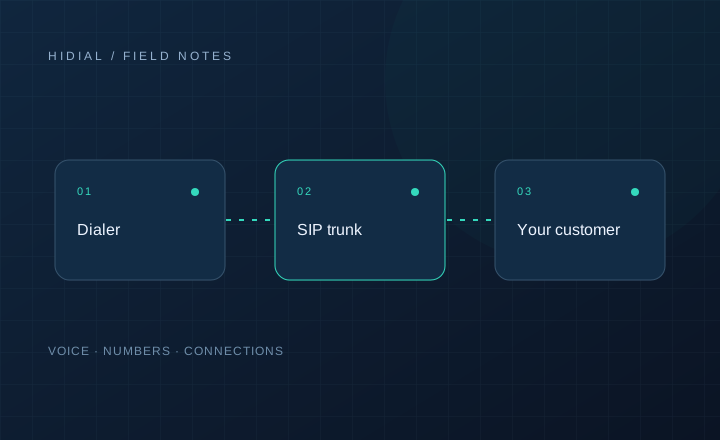
An AI opener handles the first part of a conversation and sends the result back to the campaign. Start with one job, such as confirming the reason for a requested callback and connecting the customer to an available salesperson. A narrow scope makes it possible to test what the caller hears and what the agent receives.
Map the call before writing the prompt
Draw the path from the eligible lead to the dialing system, the AI service, and the human destination. Record which component originates the call and which controls the active telephone leg. In a ViciDial-managed design, an external integration can provide the AI conversation while the existing operation owns the campaign and lead record. Confirm that the installed dialer and selected telephony provider support the path you intend to use.
Retell, for example, documents two custom telephony approaches with different transfer responsibilities. Check the transfer behavior of the chosen connection method before you design the workflow around it. Retell custom telephony documentation
Treat opening as a sequence of states
Use a lead identifier and a distinct call-attempt identifier. One lead may have several attempts, and each attempt can produce several events. Record whether the call reached the opener, whether a person engaged, and whether a human transfer completed.
A practical outcome list includes a completed handoff, an agreed callback, a request to stop, and a technical failure. Assign the permitted follow-up to each outcome. If the AI service times out after a transfer begins, reconcile the live call before attempting another connection.
Keep eligibility outside the conversation model
Check eligibility before an outbound attempt. The opener should use the approved introduction and immediately respect a request to stop. Write that request to the shared suppression process so a delayed event or a separate campaign cannot treat the lead as newly eligible.
For U.S. campaigns, the FCC has determined that AI-generated voices fall within the TCPA rules for artificial or prerecorded voice. Have the responsible team review the consent, identification, and opt-out requirements for the intended use. FCC declaratory ruling
Give the closer enough context to take over
Pass the caller's request, one or two confirmed facts, and any unanswered question. Check the receiving queue before offering the transfer. A successful transfer request and a completed conversation with a closer belong in separate reporting fields.
Test the path with internal numbers before releasing a limited campaign. Include a busy queue, a caller asking for a person immediately, a hangup during transfer, and an opener outage. Make sure staff can stop AI routing and resume the approved human workflow without redialing active attempts.
For the next step, see AI-powered lead scoring for ViciDial campaigns. Contact HiDial to review your campaign, carrier, and transfer path.